 |
 |
|||||||
 |
 |
 |
||||||
 |
 |
 |
 |
 |
||||
| |
 |
 |
 |
 |
 |
 |
|
|
 |
||||||||
| |
|
|||||||
| |
|
|
||||||
| |
|
|
|
|
||||
| |
|
|
|
|
|
|
|
|
| |
||||||||
Solution:
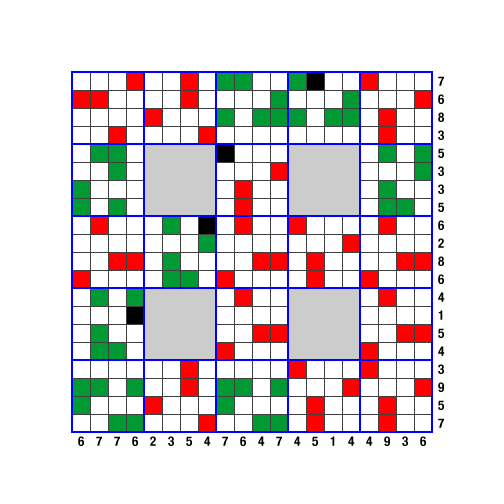
Detailed Solution:
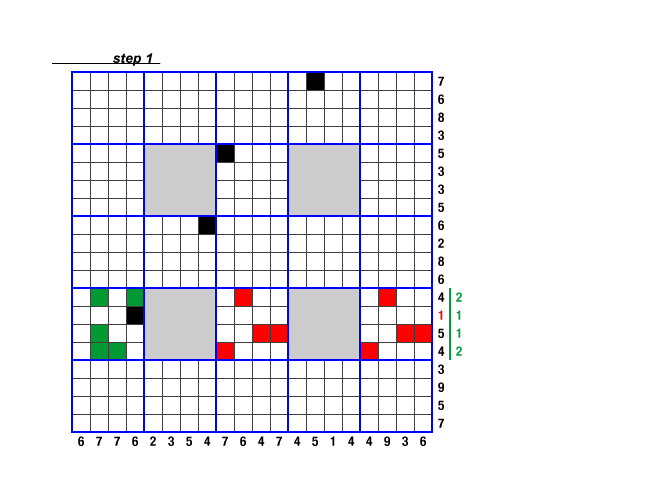
Working in the second horizontal tier of blocks from the bottom, the row with the shaded hint square is only supposed to have one shaded square. Thus the other two blocks in that tier must leave that row empty, which can only be done by using Stamp 1. After placing those stamps, the squares left to be shaded fit Stamp 2, and the hint indicates one of two possible orientations.
Both stamps have one shaded square in the corner of their grid. Working in the second vertical tier of blocks from the left, the shaded hint square in the corner can thus be filled by a particular orientation of Stamp 1 or Stamp 2. However, using Stamp 1 leaves one square to be shaded in the leftmost column. This means one of the two empty blocks must use Stamp 2 with its empty left column. Unfortunately, the other columns of Stamp 2 in that orientation don’t fit. Thus, Stamp 2 must be used in the hint block, leaving zero squares to be shaded one column. Two copies of Stamp 1 fit in the other two empty blocks.
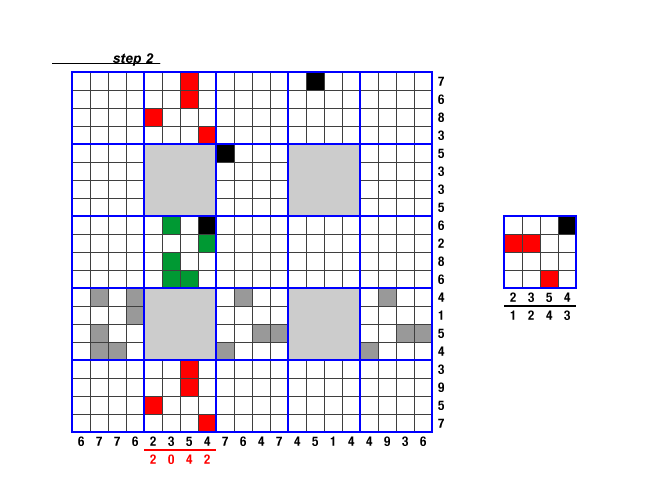
There are several different stamp orientations that would cover the shaded hint square in the second vertical tier from the right. One orientation of Stamp 1 and one orientation of Stamp 2 would leave a middle column that should have no more shaded squares. This means Stamp 1 would have to be used in the two remaining empty blocks in that vertical tier, but the rest of the columns don’t add up to the appropriate number of squares. One orientation of Stamp 2 has too many shaded squares in one column. This leaves one last orientation of Stamp 2, and subtracting, we find zero squares to be shaded one column. Two copies of Stamp 1 fit in the other two empty blocks.
The last shaded hint square is another corner square, meaning we can use one orientation of Stamp 1 or one orientation of Stamp 2. Trying Stamp 2, we obtain a middle row with zero squares left to be shaded. Stamp 1 would have to be used to keep the remaining blocks clear in that row, but the other rows don’t add up to the appropriate number of shaded squares. Thus Stamp 1 fits in the hint block. This leaves the two empty blocks in that tier to be filled by Stamp 2, but there are two different orientations that could work for each block. For the block on the right, subtracting the one stamp that has already been placed in step 1, there is one column that only needs two more shaded squares. This eliminates the alternative possibility for the block on the right. For the block on the left, again subtracting the one stamp that has already been placed in step 1, we’re still left with both possibilities. Testing each shows that one possibility leaves six squares to be shaded in an outer column (requiring three copies of Stamp 2 for the remaining blocks) and only one square to be shaded in an inner column (requiring at least two copies of Stamp 1). This eliminates the alternative possibility for the block on the left.
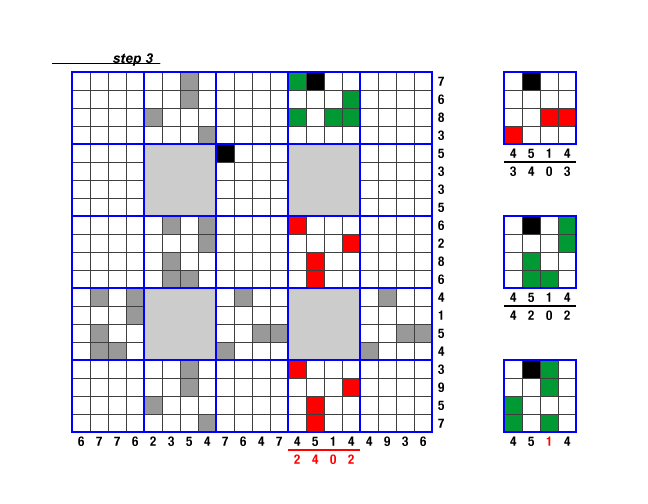
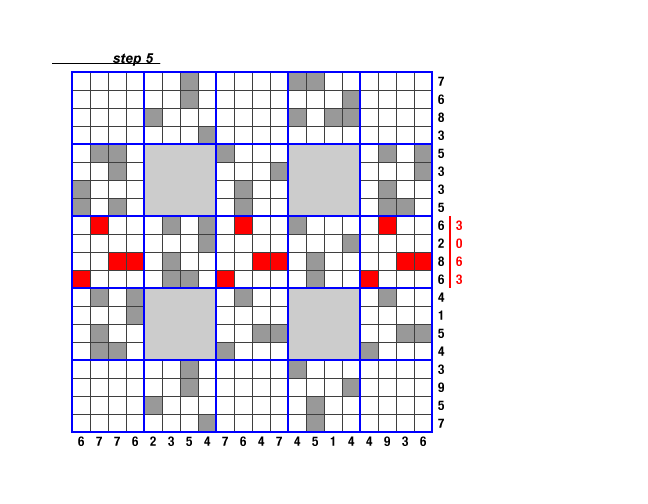
Subtracting across the middle horizontal tier of blocks, we find a middle row with no more squares left to be shaded. Thus three copies of Stamp 1, all in the same orientation, fill the three remaining empty blocks in that tier.
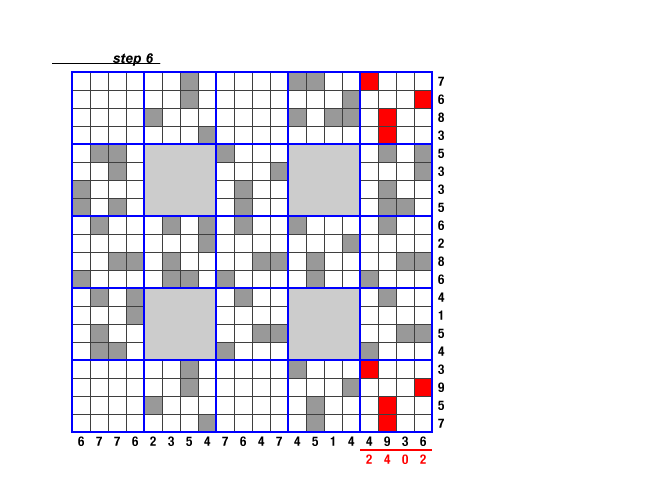
Subtracting down the rightmost vertical tier of blocks, we find a middle row with no more squares left to be shaded. Thus two copies of Stamp 1, both in the same orientation, fill the two remaining empty blocks in that tier.
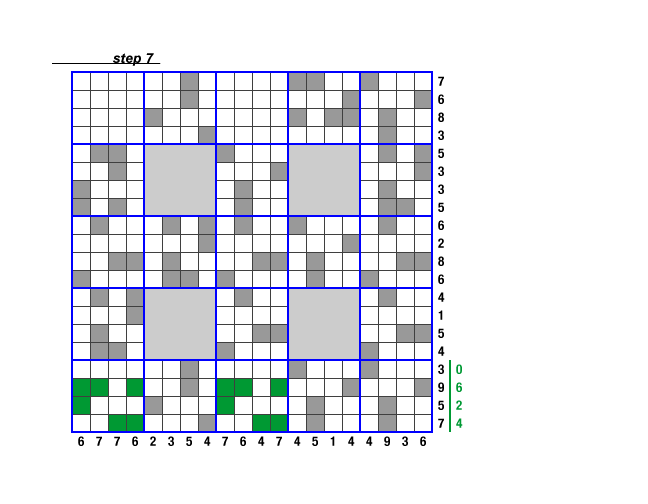
Subtracting across the bottom horizontal tier of blocks, we find an edge row with no more squares left to be shaded. Thus two copies of Stamp 2, both in the same orientation, fill the two remaining empty blocks in that tier.
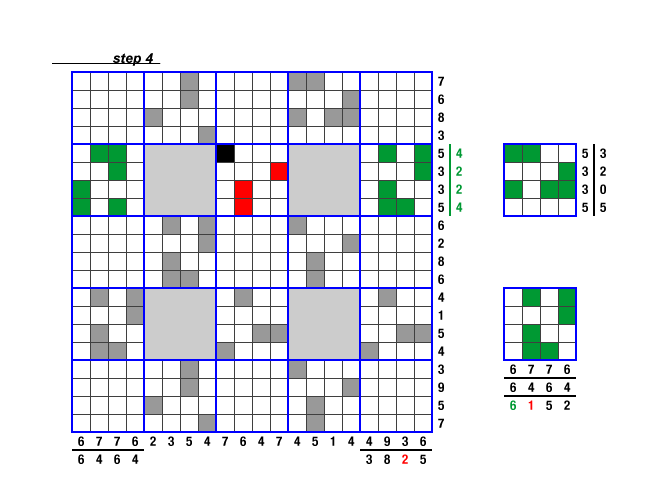
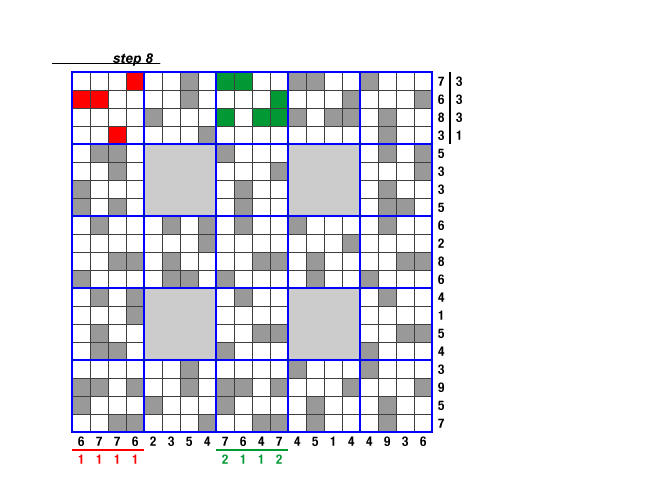
There are two empty blocks left. Working vertically, we can determine that one of two possible orientations of Stamp 1 will fill the block on the left, while one of two possible orientations of Stamp 2 will fill the block on the right. Working horizontally in the top tier of blocks, the bottom row only has one square left to be shaded, which will have to be used by Stamp 1. Thus the orientation of Stamp 2 can be determined, and then we can figure out the orientation of Stamp 1. Phew.
Last updated: May 26, 2003
Copyright © 2000-2003 All Rights Reserved